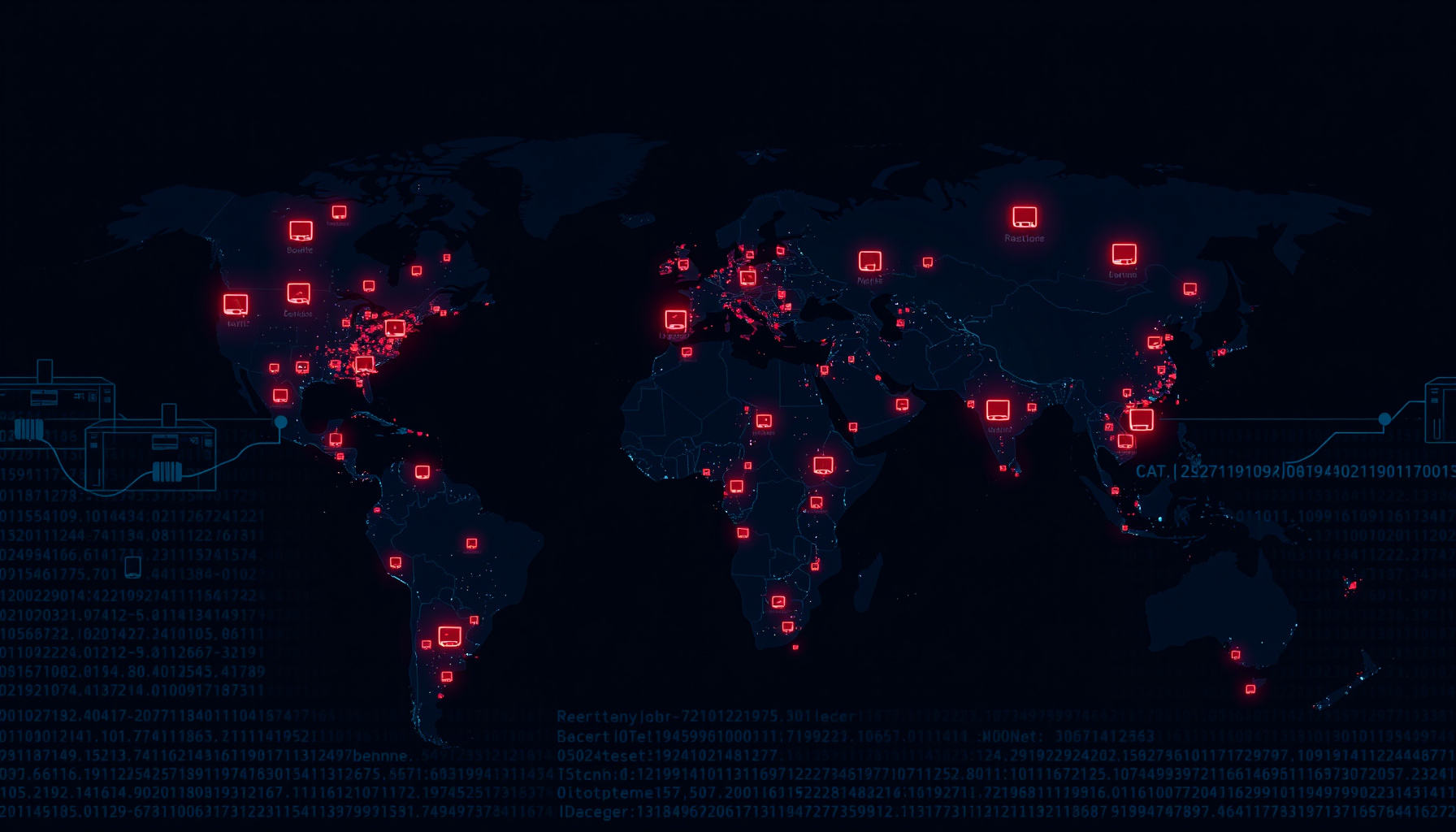
Residential Proxy Botnet Analysis: The 2026 Takedown Wave
A residential proxy botnet is the quiet backbone of modern cybercrime. In 2026, three major networks—IPIDEA, Asocks, and NetNut—were disrupted by coordinated takedowns, exposing how attackers weaponize millions of household devices for credential stuffing, ad fraud, and DDoS.
How This Was Researched
This analysis synthesizes official disclosures and threat intelligence published between January and July 2026. Primary sources include Google Threat Intelligence Group (GTIG) reports on the IPIDEA and NetNut disruptions, a DOJ press release detailing the 2025 5socks/Anyproxy case, and reporting from Malwarebytes, The Cyber Signal, Ars Technica, and SecurityWeek. The methodology involved correlating these takedown announcements and subsequent analysis. No hands-on testing of any botnet or proxy service was performed; attribution to specific espionage actors is out of scope. Last researched: August 2026.
What Is a Residential Proxy Botnet?
A residential proxy botnet is a network of compromised consumer devices—such as smart TVs, streaming boxes, routers, and phones—whose residential IP addresses are rented out as proxy exit nodes for malicious traffic. Per Malwarebytes, buyers use this access for password spraying, account takeover, ad fraud, and launching Mirai-variant DDoS attacks.
The value lies in the trusted nature of residential IP ranges. Unlike datacenter IPs, home addresses are less likely to be pre-flagged in reputation databases, allowing malicious traffic to bypass filters. The scale of 2026’s takedowns underscores the size of this hidden infrastructure, with networks comprising millions of devices.
How Do Residential Proxy Botnets Work?
Residential proxy botnets are built by infecting devices with software development kits (SDKs) embedded into applications and firmware, or by co-opting already-compromised devices, then routing buyer traffic through the victims’ residential IPs. For instance, Google’s Threat Intelligence Group found IPIDEA shipped SDKs for Android, Windows, iOS, and WebOS across 13 different brands. Similarly, NetNut grew by embedding SDKs into smart TVs and streaming boxes, and shipped components for the BadBox 2.0 botnet.
Operators often lure device owners with a “bandwidth sharing” proposition, offering small payments for unused internet capacity. Once active, the software masks the true origin of buyer traffic, creating a scalable, anonymized proxy service. This creates a lucrative economy where botnet operators sell access by the gigabyte or connection.
The 2026 Takedown Wave: IPIDEA, Asocks, and NetNut
2026 saw three coordinated takedowns of major residential proxy botnets, building on the 2025 5socks/Anyproxy precedent. The timeline includes a Jan. 28 action against IPIDEA, a May 28 operation against Asocks, and a Jul. 2 disruption of NetNut.
- Jan. 28, 2026 — IPIDEA: A Google-led action disrupted what it described as “one of the largest residential proxy networks in the world.” Threat intelligence showed over 550 tracked threat groups used IPIDEA’s exit nodes in a single 7-day period.
- May 28, 2026 — Asocks: Dutch Politie and the NCSC-NL dismantled a botnet of at least 17 million compromised consumer devices by taking down 200 Netherlands-hosted servers (corroborated by Ars Technica).
- Jul. 2, 2026 — NetNut (a.k.a. Popa): Google, with the FBI and Lumen, disrupted a residential proxy botnet of at least 2 million devices. In one June week, Google observed 316 distinct threat clusters using suspected NetNut exit nodes for password sprays.
- Precedent — May 9, 2025 — 5socks/Anyproxy: The DOJ unsealed an indictment of 4 operators who amassed $46 million through their botnet. Notably, only ~10% of its source IP ranges were flagged as malicious in VirusTotal, per SecurityWeek.
Why Takedowns Don’t Stop the Proxy Ecosystem
Takedowns remove infrastructure but not the business model, because operators resell and whitelabel capacity. Google stated it has “high confidence that many popular residential proxy brands are in fact whitelabeling the NetNut botnet” through a reseller program. Similarly, the IPIDEA action revealed 13 ostensibly independent proxy/VPN brands were one network.
As the Dutch NCSC-NL noted, “Because residential proxies use real, trusted IP addresses, malicious use of them is much more difficult to detect or block.” This resilience allows for rapid infrastructure reuse; the NetNut operation was tied to the BadBox 2.0 botnet, and IPIDEA was linked to both BadBox 2.0 and the Aisuru/Kimwolf botnets.
How Defenders Should Respond to Residential Proxy Botnets
Defenders should treat residential-IP traffic as suspect and rebaseline their IP-reputation tooling, because the 2026 disruptions reshuffled exit-node pools. Key actions include rebaselining geo/ASN trust rules after the disruptions, as old allow-lists are now stale.
- Monitor for password-spray and account-takeover attempts originating from residential IP ranges. Treat “clean-looking” residential exit traffic as a primary detection signal, per the NCSC-NL rationale documented by The Cyber Signal.
- Audit the mobile and OTT app ecosystem you ship or permit. Look for embedded proxy SDKs and “bandwidth sharing” libraries, as seen in the NetNut growth strategy documented by Google’s Threat Intelligence Group.
- Enforce app-store safety tooling and vendor certification. Google used Play Protect to automatically warn and disable apps embedding NetNut SDKs and disabled command-and-control accounts, per Google’s Threat Intelligence Group.
- Keep exit-node indicators of compromise (IoCs) and C2 indicators current in blocklists, but expect whitelabeled successors to emerge quickly, per SecurityWeek.
- Integrate these insights into your broader defense strategy by consulting established security frameworks. For context on botnet resilience, see our analysis of blockchain-based C2 botnets and our malicious web bot analysis.
FAQ
How do devices end up in a residential proxy botnet?
Devices are recruited primarily through SDKs hidden in seemingly legitimate applications and firmware for smart TVs and streaming boxes. Attackers also co-opt devices already infected with other malware. Both the NetNut and IPIDEA operations relied heavily on this SDK-based infection method to build their networks.
Could my home network be part of a proxy botnet without me knowing?
Yes, this is common. The botnet software often operates silently, disguised as a “bandwidth sharing” tool that promises passive income. Google used Play Protect to automatically warn and disable apps embedding NetNut SDKs, showing how these infections can run undetected by the user until flagged by security tools.
What happens to a proxy botnet after a takedown?
While the specific infrastructure is seized, the underlying business model persists. Operators frequently resell or whitelabel their capacity, allowing the network to re-emerge under new brands, as Google’s Threat Intelligence Group documented for NetNut. The 2025 5socks/Anyproxy case confirms that takedowns disrupt but do not destroy the ecosystem.
📖 Related Reads
- ToolBrain — tool reviews, LLM comparisons, and AI workflow guides
Cross-links automatically generated from None.