Ghost Tapping Is Here: How Fraudsters Are Stealing Hundreds Through Contactless Payments
Ghost Tapping Is Here: How Fraudsters Are Stealing Hundreds Through Contactless Payments
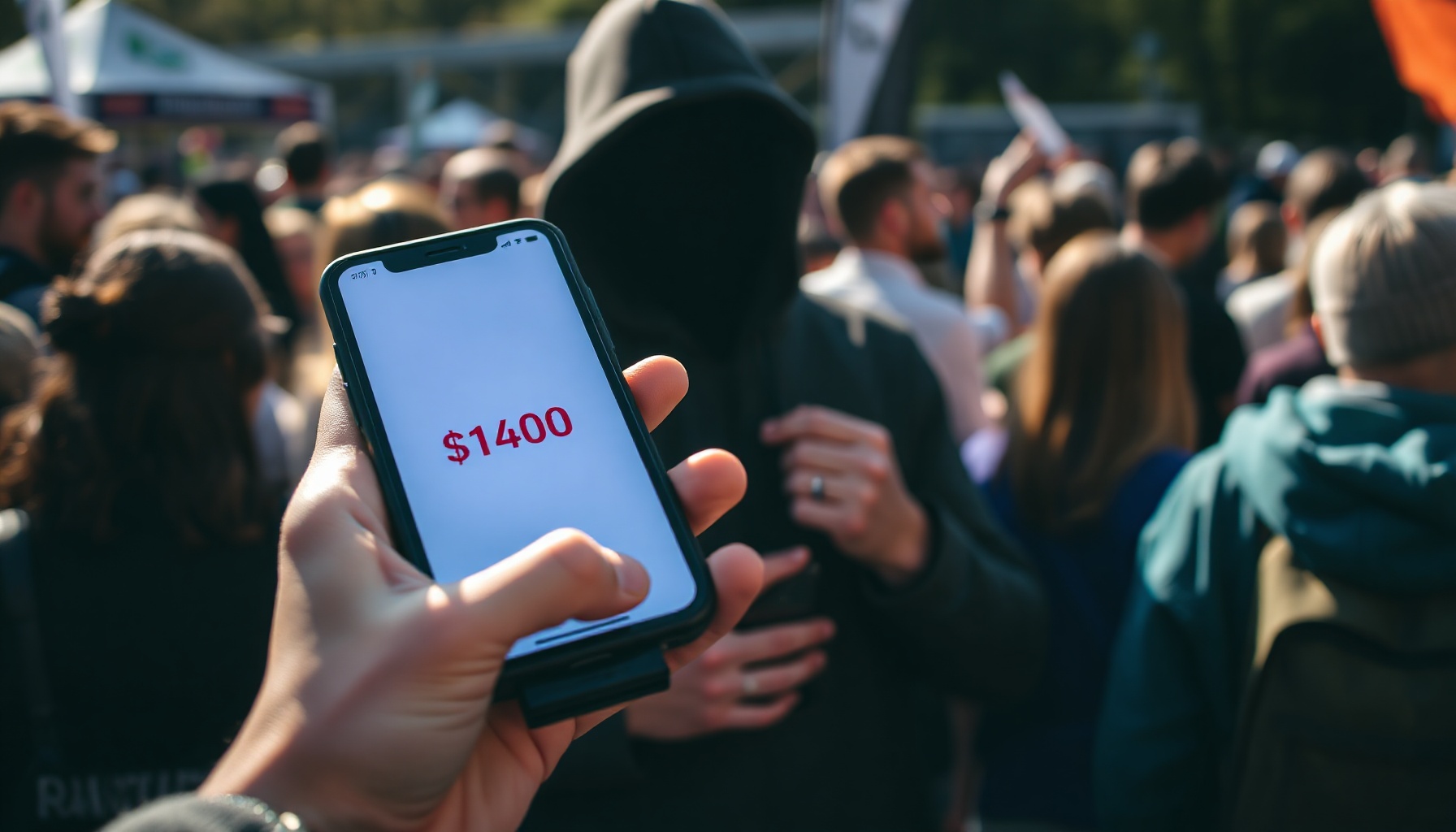
A 29-year-old Michigan woman was shopping at Walmart when two teenagers approached her claiming to collect donations for a college tour fund. They asked for $50. She tapped her iPhone to the terminal they were holding, didn’t look at the screen, and walked away. When she checked her bank statement later, the charge wasn’t $50. It was $1,000. The entire transaction — the verbal amount, the screen prompt, the final charge — had been manipulated before she ever got her phone near the reader. USA Today reported the case on July 27, 2026.
Her experience isn’t an isolated incident. It’s the leading edge of a fast-growing scam that law enforcement and consumer protection agencies are calling “ghost tapping” — a contactless payment fraud that costs victims hundreds or thousands of dollars per incident, often with no awareness that anything went wrong until they check their accounts days later.
What Ghost Tapping Actually Is
The Michigan Attorney General’s office defines ghost tapping as contactless payment fraud where a scammer engineers a tap-to-pay transaction without ever holding your card or phone. The key word is engineers. These aren’t pickpockets. They’re social operators who create a situation — a charitable cause, a crowded doorway, a “quick transaction” — that gives them control of the payment terminal at the moment you tap. The Michigan AG issued a formal consumer alert on the tactic.
In the simplest version, the scammer verbally quotes one amount but has already entered a much higher figure into the terminal. Most people tap without reading the screen. That’s all the scammer needs.
But ghost tapping has variants, and they’re getting more aggressive.
The Three Versions to Watch For
1. The Overcharge Donation Scam
This is the Walmart scenario: someone approaches you soliciting a donation — for charity, a school trip, a sports team — and hands you a portable terminal or asks you to tap on theirs. The BBB has documented multiple victims losing $537 and $1,100 to a door-to-door “chocolate fundraiser” operating on this exact model. The BBB issued a formal scam alert on contactless payment fraud. The scammer quotes $20, $50, or some other plausible donation amount. The terminal is pre-loaded with a figure five, ten, or twenty times higher. The victim taps, doesn’t verify, and the charge processes instantly.
2. The Crowd Bump
This version targets dense environments — concerts, sporting events, festivals, packed transit stations. The BBB of Central New England describes ghost tapping as a “fast-growing” scam specifically concentrated in crowded venues. Radio Worcester reported the BBB’s warning. A scammer carrying a concealed or disguised portable reader moves through a crowd, holding the device near people’s pockets, purses, or phones. Contactless cards and phone wallets can be read through thin fabric. Most contactless cards have a transaction limit (often $50–$100 depending on the bank and country), but scammers can attempt multiple rapid transactions, and some wallets or devices don’t enforce the limit for in-store readers.
3. The Door-to-Door Terminal Swap
In this version, someone comes to your door selling something — candy, magazines, home security inspections — and presents a payment terminal for you to tap. The terminal may have been tampered with, or the scammer may simply be pocketing the real transaction amount and processing a different one. The BBB’s alert specifically flagged door-to-door operations using this method.
Why This Scam Is Surging Right Now
Three factors have converged to create ideal conditions for ghost tapping.
First, contactless payment adoption is at record levels. Most consumers tap reflexively now. The muscle memory that once applied to swiping a magnetic stripe has transferred to tapping, and people do it without looking at screens, confirming amounts, or reading prompts. Scammers are exploiting a behavior that became automatic.
Second, portable payment terminals are cheap and widely available. Anyone can acquire a card reader that connects to a phone or tablet for under $50. This lowers the barrier to entry for scammers dramatically compared to traditional card skimming, which required physical modification of bank-owned hardware.
Third, summer brings crowds. Festivals, fairs, outdoor markets, sports tournaments, and travel all create environments where people are distracted, moving quickly, and less likely to scrutinize a payment interaction. Ghost tapping thrives on inattention, and crowded summer events provide exactly that.
Real Victims, Real Losses
The Michigan Walmart case shows how quickly a friendly interaction turns into an unauthorized charge. According to the police report, the 29-year-old victim was approached just after 6:30 p.m. on Saturday, June 27, by two men who appeared to be high school students. They told her they were raising money to travel and tour colleges, and they suggested she pay by tapping her iPhone. She agreed to donate $50, tapped without checking the screen, and discovered that same evening that the charge had processed for $1,000. USA Today reported the full timeline. When she reviewed the transaction in her banking app, the amount on the payment system had been set to $1,000 the entire time — the scammers were never going to charge $50. USA Today’s follow-up checklist confirmed that detail.
The door-to-door version has hit victims even harder. A report filed with BBB Scam Tracker describes an individual going door to door claiming to sell chocolate on behalf of a group supporting special needs students. He said he could only accept tap-to-pay, then charged amounts the cardholders couldn’t see on the screen. The person who filed the report said the scammer “got my mother for $537,” that another victim lost $1,100, and that he changed neighborhoods frequently to avoid being caught. The BBB published the account in its scam alert.
Note what the two cases have in common. In the Walmart case, the scammers worked in pairs — two men approached the victim together and steered the conversation toward a tap-to-pay donation. In the door-to-door case, the operator moved between neighborhoods to stay ahead of complaints. In both, the terminal stayed in the scammer’s hands, the quoted amount was small and plausible, and the victim never saw the real figure. The BBB also notes that fraudsters sometimes make small withdrawals specifically to avoid triggering the fraud detection systems that flag large charges — which is why some victims don’t notice the damage for weeks. The BBB’s alert documents that tactic.
The Psychology Behind Why We Fall for It
Ghost tapping works because it targets habits, not hardware. Tapping became a reflex years ago: phone out, hold it near the reader, done. In thousands of legitimate transactions, the screen always showed the right amount, so people stopped reading it. That learned trust is the vulnerability. Scammers exploit the gap between what the interaction feels like — a routine tap — and what it actually is: an unverified transaction. The amount on the terminal screen is the only barrier between a $50 donation and a $1,000 charge, and most people never look at it.
Social pressure does the rest. A stranger on the phone is easy to hang up on; a stranger standing two feet away holding a card reader is not. AARP’s Amy Nofziger told USA Today that in-person fraud is harder to resist precisely because of that dynamic: “It’s harder to say no.” USA Today reported her warning. Refusing to tap means telling someone to their face that they might be a fraudster. Most people would rather risk a bad charge than risk seeming rude. Scammers know this and rush the interaction, keeping up the story so you never get a quiet moment to look at the screen.
The charitable impulse is the bait. Giving produces a genuine psychological reward — the “helper’s high,” the warm feeling that follows a donation. The pitches are built to trigger it: college tour funds, special needs students, sick relatives. The amounts are small enough that declining feels petty, and the causes are vague enough that asking questions feels like an accusation. When victims realize what happened, many are too embarrassed to act fast — USA Today noted that people who fall for these scams “often say they just wanted to help.” The checklist article made that observation. The delay is part of the scam. Charges that go undisputed for weeks are far harder to reverse, and the money is long gone.
How to Protect Yourself
Consumer protection experts, including AARP’s Amy Nofziger, have outlined clear steps for avoiding ghost tapping. USA Today published a consumer checklist on July 30 with the following guidance:
1. Always read the terminal screen before you tap.
This is the single most effective habit you can build. Before your phone or card touches the reader, look at the amount displayed on the screen. If it doesn’t match what the person told you, don’t tap. Walk away.
2. Match the spoken amount to the screen — exactly.
Don’t accept a general range. If someone says “that’ll be $50,” the terminal should show $50.00, not $500, not $1,050, not $50 with extra line items you didn’t agree to. If the numbers don’t match, decline the transaction.
3. Never hand your phone or card to a stranger.
You should maintain physical control of your payment device at all times. A legitimate merchant will have you tap on a terminal they hold or one that’s mounted in a fixed position. If someone asks you to hand them your phone “to complete the tap,” that’s a manipulation tactic. Hold your own device.
4. Treat “we only take tap-to-pay” as a red flag.
Legitimate small vendors and fundraisers accept multiple payment methods. If someone insists they can only take contactless — no cash, no chip insert, no manual card entry — be suspicious. They may have a reason for wanting you to tap quickly on a device they control.
5. Memorize a refusal script.
Nofziger recommends having a prepared phrase ready so you don’t get flustered in the moment. Something like: “I don’t make donations through card readers. I’ll visit the organization’s website directly.” Or simply: “No thank you, I don’t tap-to-pay with strangers.” Having the words pre-loaded makes it easier to use them under social pressure.
6. Monitor your accounts in real-time.
Enable transaction notifications on your bank and credit card apps. If a charge hits that you didn’t authorize, you want to know within minutes, not weeks. Early detection makes chargeback claims easier and limits the damage.
7. Tap with a credit card, not a debit card.
If you tap, make it a credit card. Credit cards generally offer stronger fraud and purchase protections than debit cards or peer-to-peer payment apps, as USA Today’s checklist noted. Under the Fair Credit Billing Act, your liability for unauthorized credit card charges is capped at $50, and most issuers waive even that. Debit cards are different: the money leaves your checking account immediately, and getting it back depends on how fast you report the loss to your bank. A ghost-tapped debit card can drain the account you pay rent with. A ghost-tapped credit card is a dispute, not an empty bank account.
8. Carry your cards in an RFID-blocking wallet or sleeve.
Both the BBB and the Michigan Attorney General’s office recommend RFID-blocking wallets or sleeves to stop your cards from being read through a pocket or purse. A blocking wallet only protects the cards inside it, though — it does nothing for your phone. The Michigan AG separately advises making sure your phone must authenticate before it will complete a payment, and turning off tap-to-pay (NFC) when you’re not using it.
The Bigger Picture
None of this means contactless payment is broken or dangerous. Tap-to-pay technology uses tokenization and encryption that make it significantly harder to steal card data than the old magnetic stripe system. The technology itself is not the vulnerability.
The vulnerability is social. Ghost tapping is a confidence trick that uses a terminal as its tool instead of a smooth talker’s mouth. It works because people trust the tap interaction to be transparent — what you see is what you pay. Scammers are betting that you won’t look, won’t question, and won’t notice until it’s too late.
The fix is behavioral, not technical. Read the screen. Verify the amount. Control your device. And if a stranger hands you a payment terminal in a parking lot, at your doorstep, or in a crowd, the safest response is the simplest one: don’t tap.
Have you encountered a ghost tapping scam or another contactless payment fraud attempt? Report it to your state attorney general’s consumer protection division and file a complaint at BBB.org/scamtracker.